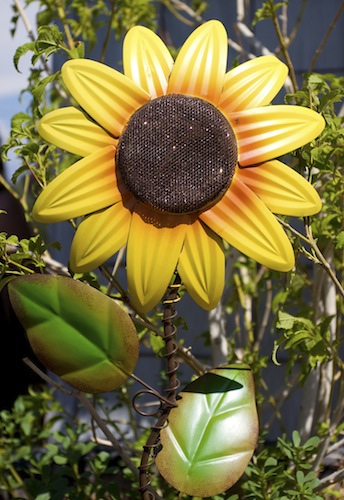
Valley of the Sunflowers
From the Mag | Creating Downtown
Posted on 2/28/13 by Susan Copeland » No Comments
Before you hit the sidewalks for the 25th anniversary Art Detour this weekend, we’re revisiting artist, writer, and advocate, Susan Copeland’s overview of the impact the arts have had in our downtown – originally published in the Nov/Dec 2011 edition of Downtown Phoenix Journal Magazine. Her article provides extra background for appreciating Artlink’s “Detour in Time” exhibit at the A.E. England gallery, open this weekend for First Friday, and Saturday and Sunday for Art Detour.
What is it about Downtown Phoenix that interests a college student, a developer, a cyclist, a chef, an artist or an engineer?
It’s the energy on the streets and the buzz in the cafes. It exists in every coffee-house conversation, every stroll down a newly shaded street, at any art opening, and in the first bite of sushi. It’s the young couple with the stroller, baby and fuzzy dog walking after dark. It’s the lunchtime food truck queues, the thunder of balls in the bowling alley, and the smell of fresh peaches at the market. Engaged people are creating new life in downtown Phoenix and the evidence can be seen, heard, felt and tasted.
This buzz is firmly rooted in the creative community that has worked for many years to bring downtown to life. It is evident in the history of the arts-led transformation of downtown, and how it has fueled revitalization and overcome the obstacles that challenge the continuation of this transformation.
Early Urban Arts Pioneers
The roots of this transformation can be traced through the history of Beatrice Moore and Tony Zahn, who came to Phoenix sight-unseen in 1986. They were drawn by the optimism behind the city’s name, the desert and the non-hip art scene. They created the very first Art Detour, an annual tour of artists’ studios with a small group of 20 art spaces. “It was a way for artists to show their own work independent from galleries. It was an educational event for the public,” Moore said.
“[Art Detour] was a way for artists to show their own work independent from galleries.”
– Beatrice Moore, GAMA
Moore and Zahn watched gentrification take place, often spurred by the unwitting ability of artists to make a place cool. Their first artist studio was in an old brick warehouse on the site where U.S. Airways Arena now stands. A new jail occupies the site of their second studio. Recognizing that a renter’s fate is determined by his landlord, they bought their first building.
“Artists need to get ownership,” Moore said. “Young artists are not planning for their future. New construction is often not affordable for studio space.”
Their purchase and renovation of historic buildings along Grand Avenue not only created affordable artist studios, but also helped to transform a formerly decrepit downtown stretch of boarded-up buildings into a revitalized corridor that draws thousands of people to art openings, studios, a growing number of bars and restaurants and the annual Grand Avenue Festival.
“It is a diverse and younger crowd, and has introduced a lot of new folks to the museum.”
– Jim Ballinger, Phoenix Art Museum
A Detour Takes Hold of Fridays
The success of the yearly Art Detour led another group of artists to start a monthly tour called Phoenix Arts After Hours. This gave birth to the nationally lauded First Friday, a self-guided tour of art spaces and galleries held on the first Friday of every month. It has become the core of the downtown arts scene.
The Phoenix Art Museum has participated in Artlink’s First Friday art walk on and off since its inception. “We’ve had a very positive connection with First Friday,” said museum director Jim Ballinger. “We’ve had anywhere from 800 to 2,000 people come through the museum on a First Friday evening. It is a diverse and younger crowd, and has introduced a lot of new folks to the museum.”
Would there be as many new restaurants, condos, galleries and hotels downtown without the presence of 10,000-plus people wandering around downtown on First Friday? The presence of the creative community has brought life, vitality and identity to downtown.
“The easiest way to find a community in Phoenix is to participate, get involved.”
– Cindy Dach, Roosevelt Row CDC
The Row Takes Shape
When Cindy Dach and Greg Esser moved here from Denver, they struggled to find a community. Eager to renovate and without any appealing living spaces available, they began an odyssey. Fifteen years, several buildings and many projects later they helped make Roosevelt Street a cornerstone of the downtown arts community. “The easiest way to find a community in Phoenix is to participate, get involved,” says Dach. That they have. They formed the successful eyelounge and 515 artists’ collectives, MADE Art Boutique, Kitchen Street Studio and the Roosevelt Row Community Development Corporation (CDC).
Wayne Rainey, Kimber Lanning and Dach/Esser all bought buildings and created art spaces within six months of each other. The prices were low enough at the time to make the spaces affordable. Dach says that artists are natural problem solvers. “We looked at the closed up buildings and dark spaces and said, ‘Yeah, this sucks. How can we fix it?’”
“It’s the small things that form the connective tissue that makes the big things work.”
– Ed Lebow, Phoenix Public Art Director
It is this type of creativity, community involvement, forward thinking and innovation that many people believe will move Phoenix forward. Ed Lebow, Public Art Director for the City of Phoenix Office of Arts and Culture, says, “It’s the small things that form the connective tissue that makes the big things work.”
Small ideas yielding big results are creating an organic identity for downtown today. The little farmers’ market that grew into a grocery store, coffee house, wine bar and community gathering space is another perfect example.
Community Sustenance
Chicago transplant Cindy Gentry fell in love with the historic Santa Fe Depot in the warehouse district near Jackson Street. Her goals were to create easy access to healthy food for low-income residents, help keep farmers on their land and create jobs. “Our focus was on low income people but we didn’t want to do it in a vacuum,” Gentry said. “We wanted to create a place where people from all backgrounds could come together.”
She was drawn to downtown because “the creative energy of the city lies here. A connection to the arts community was a logical choice.” Although the Santa Fe Depot market never happened, Gentry [as executive director of Community Food Connections] did create the Phoenix Public Market, a grocery store and a thriving farmers market, with a strong emphasis on organic produce and handmade crafts, that anchors Saturday mornings downtown. Says Gentry, “The creative energy that is here in Phoenix is looking for places to get out.”
“The creative energy that is here in Phoenix is looking for places to get out.”
– Cindy Gentry, Community Food Connections
That creative energy is apparent in the art-centric downtown development of developer and indie rocker Tim Sprague, of Habitat Metro. Two of his current projects are the adaptive reuse of an old hotel, the Oasis, to create affordable living and work spaces for artists, and, most recently, a remodeling of the Lexington hotel that centers around arts and culture.
“Humans have talent that we should recognize and celebrate,” Sprague said. “Performing arts, music, media, theatre – they are the spice of life. Art has the ability to bring people together to initiate discussion. It’s an automatic switch for turning on tolerance and bringing together diverse ideas.”
“The organic arts scene that developed brought focus to the downtown,” he said. “It provided the cushion and continuity for things to keep happening. It brought traffic and people downtown that would not have come. It made downtown relevant.”
This ability of the artistic community to create relevance and continuity was evident to George Kritikos and his wife Stacy, who left Chicago to buy and take over the Athenian Grill, a Greek restaurant on Central just south of Roosevelt. Kritikos believes that the arts community is good for the area. Historically, he watched how the arts helped in the transformation of downtown Chicago from a scary dark place. “(Mayor Richard) Daly cleaned up the streets. There was artwork, painted cows, landscaping, lighting. All of it together helped take away the scary aspect of the streets. Then coffee shops and restaurants starting popping up.”
“The organic arts scene that developed brought focus to the downtown. It provided the cushion and continuity for things to keep happening. It brought traffic and people downtown that would not have come. It made downtown relevant.”
– Tim Sprague, Habitat Metro
Filling the Gaps
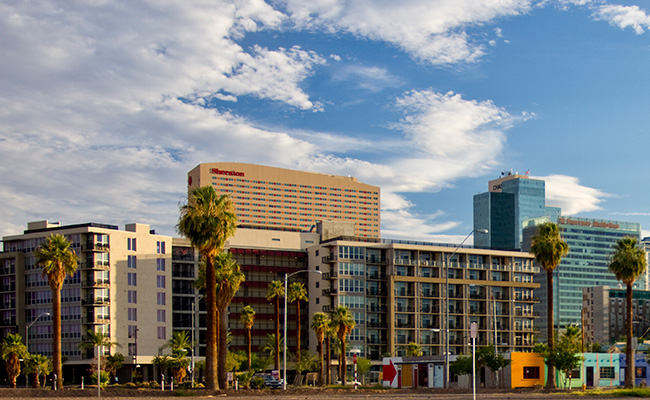
The biggest stumbling block to this transformation in Phoenix may be the empty lots that divide all of the cool, hip things from each other. When you look down First and Third streets at night, south of Roosevelt, it is dark and scary. People are afraid to walk north from the Sheraton and Alta Lofts.
But the creative community is working on a solution for that too.
Many temporary uses for empty lots have been proposed, but shot down for fear of them becoming too popular and permanent – leading to a potential for public outcry when the temporary project has to make way for a permanent structure. Nevertheless, two artistic uses have recently been implemented.
On Roosevelt near Fourth Street, the Roosevelt Row CDC, has cleaned up, dust-proofed and put temporary lighting in an empty lot to create the First and Third Friday A.R.T.S. (Adaptive Reuse Temporary Spaces) Markets, giving small local vendors the opportunity to become part of the popular art walks. Small booths dot the lot twice each month selling everything from ice cream to hand-crafted wood items.
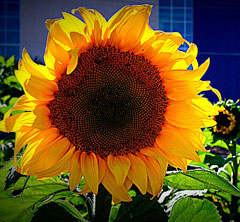
A few blocks southeast of the A.R.T.S. Market is Valley of the Sunflowers, another Roosevelt Row temporary adaptive reuse project, which broke ground in September, and will feature an entire block of sunflowers. It is the brainchild of Kenny Barrett, downtown resident and newly appointed project director for Roosevelt Row’s A.R.T.S. program. With grant funding from Intel and volunteer support from the community, the project will produce sunflower oil that the students at the adjacent BioScience High School will help harvest. They will then use the oil to run the biofuel car that they are creating.
As little as it is, the Valley of Sunflowers project may just be one of the most important projects in downtown Phoenix in the past 10 years. It has brought together young people, artists, engineers, developers and the city to create a project that is sustainable, creative and breaks the boundaries of what it is possible to accomplish in downtown Phoenix. Most importantly, it removes the barrier of fear and apathy toward addressing the problem of the empty lots.
It is easy to see why a college student, a developer, a cyclist, a chef, an artist and an engineer would be drawn to a place like Phoenix. The vibrancy and buzz that created places like Paris, Chicago and Portland are in their infancy here. Phoenix will not recreate or become any of those places. It is creating its own identity. It is growing organically because people want this sustainable lifestyle. More and more people are choosing an authentic experience: enjoying coffee and a crepe at JoBot; shopping for handmade one-of-a-kind items at MADE; finding organic locally grown produce at the Public Market; mingling with neighbors at Faces, Places and Spaces amidst the art at Bragg’s Pie Factory; or lingering over a late night imported beer at Carly’s. If none of these places and events are familiar, then you are missing out on the core of the new Phoenix.
A Desert of Ideas
Posted on 1/15/13 by Jen Urso » No Comments
I have buried my sketchbook under books on polar exploration, a plant-based diet and the concept of space in the age of the internet. When I enter my studio space, I take a moment to stare frighteningly at the scattered, messy desktop buried under unopened mail and a few dirty coffee cups. I am haunted by Facebook posts of artist friend accomplishments and the reflection it has on my inactivity.
This is the frozen desert of being at an artistic standstill.
Like pressing on through a frigid, barren landscape with no clear end to the steady, repetitive horizon: the days of inactivity and unmeasurable creativity continue. For many artists, this is when we start to look at whether it might have been better to study as a Latent Print Examiner or follow a more practical career as an accountant. Maybe some have even fantasized about the seemingly simple life as a heavy machine operator or bus driver. Imagine the satisfaction of completing an honest day of work and settling in to relax in the evening.
This possibility is as remote as a constantly shifting magnetic pole and as unappealing as an unseasoned bowl of polenta. Any artist who has attempted this shift in career due to a temporary lack of inspiration soon finds out that they are floating in a virtual world of non-ideas. It is not the world they are cut out for.
Unfortunately, the artist is beset with the drive to produce and put something in to the world. Although one might be able to sit back and be distracted, distraught and disengaged, the pull to act keeps nagging like hunger. I can’t ignore forever that there are thoughts in my head and I am compelled, like an explorer was to the open sea, to find out more about it.
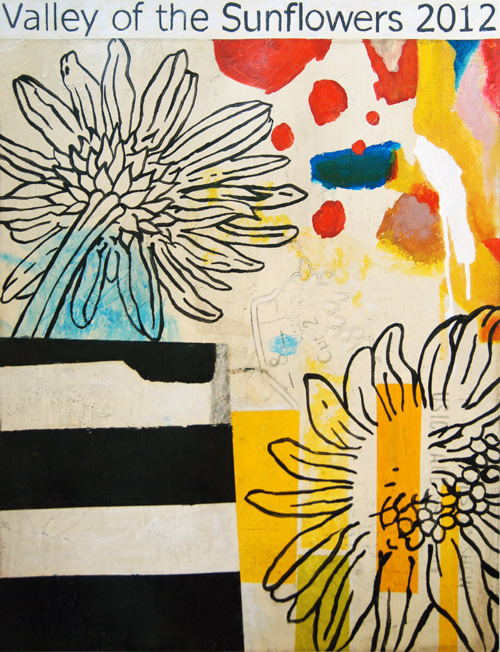
It is time to get out. When in the darkest moments of intellectual despair, sometimes it’s better to turn outward. Luckily, Phoenix has answered with a repertoire of activities to foster ideas, import information and maybe most importantly: generate human contact. Tuesday night Lawn Gnome hosts Books and Beakers, a weekly “bringing science to the people” event on the subject of Time Dilation Theory and more remotely local interdisciplinary artist Chris Danowski opens his show Dogface at the ASU West, Artspace West Gallery. Friday I can visit the multi-media installation by Ann Morton at Modified, Jackalope Ranch’s Manifesto exhibit at Drive-Thru Gallery and the Valley of the Sunflowers Paper Project at Combine Studios.
With so many options to turn outward, I have no reason to fall further into the crevasse of my own artistic inactivity. Instead, I can revel in the collective ability for others in the community to lift me up through their own action and energy and realize that I will get mine back in time. The desert, even in its cold state, need not be bleak.
Suggested reading: The Race to the White Continent: Voyages to the Antarctic by Alan Gurney; Below the Convergence: Voyages Toward Antarctica, 1699-1839, Alan Gurney; City of Bits: Space, Place, and the Infobahn, William J. Mitchell; Thrive Foods: 200 Plant-Based Recipes for Peak Health, Brendan Brazier
From the Wire | Community Invited to Help Turn Brown Lots Green
Posted on 5/11/12 by DPJ Staff » No Comments
Some news items don’t need translation. That’s why DPJ launched the From the Wire series, so we could serve the destinations here by posting information and announcements – in their own words.
“Turning Brown Lots Green”
Roosevelt Row Annual Fundraiser
Join a huge group of local artists, activists, gardeners, elected officials, and committed residents for one of downtown’s biggest annual parties!
Even better, join the party to support one of downtown Phoenix’s most dynamic organizations — Roosevelt Row, CDC, and its burgeoning A.R.T.S. (Adaptive Reuse of Temporary Space) Program.
The program turns empty dirt lots into amazing places like the Valley of the Sunflowers, the A.R.T.S. Market held on First and Third Fridays, the annual Pie Social, and Food Truck Festivals. With your help we will be able to activate additional vacant land in 2012!
Buying a $30 ticket entitles you to two of Bliss/ReBar’s delicious drinks and a smorgasbord of appetizers. Buying a $100 ticket will send you home after the event with a signed, limited edition lithograph by acclaimed local artist James Angel (right). An amazing raffle and silent auction will help cap off the night.
If you go
Event: Turning Brown Lots Green!
Date: Monday, May 21, 2012
Time: 5:30 – 8:30pm
Location: Bliss/ReBAR, 901 N. 4th Street, Phoenix AZ 85004
Tickets: Buy tickets online $30, $100 (includes lithograph) All tickets include two drinks and complimentary appetizers.
Contact: 602.772.0083
All proceeds will support the A.R.T.S. (Adaptive Reuse of Temporary Space) Programs. Programs include: A.R.T.S. Gardens, Market, Sculpture and Film.
Honorary Host Committee
Mayor Greg Stanton • Vice-Mayor Michael Johnson • Councilman Tom Simplot • Senator Steve Gallardo • Senator Robert Meza • Senator David Lujan • Senator Leah Landrum Taylor • Representative Anna Tovar • Representative Martin Quezada • Representative Chad Campbell • Representative Debbie McCune-Davis • Representative Lela Alston • Representative Katie Hobbs • Representative Catherine Miranda • Representative Ruben Gallego
Host Committee
James Angel • Rhonda Bannard • Kenny Barrett • Rhonda Boyle • Eileen Brill-Wagner • Amy Buchan • Dorina Bustamanta • Hillary Butler • Cassidy Campana • Laura Capello • Kendra Cea • Alaina Chabrier • Charles J. Coughlin • Cindy Dach • Jennifer Delgado • Greg Ensell • Greg Esser • Rusty Foley • Francesca Godi • Shannon Goodman • Murphy Hebert • Amy Heisler • Nancy Hill • Jasmine Jarrett • Patty Johnson • Don Keuth • Aaron Kimberlin • Andrew Knochel • Kim Larkin • Carla Logan Wade • Kali Miller • Frank McCune • Jim McPherson • Joe Murphy • Benah Parker • Vermon Pierre • Chris Pruitt • Alison Rainey • Lawrence Robinson • Shannon and Chip Scutari • Marshall Shore • Alisa Lyons Sloan • Eric Sloan • Nicole Underwood • Toby Urvater • Amber Williams •
• Eileen Yazzie • Daniel Zawisha •
Brought to you by
COX, APS and Highground Public Affairs Consultants
From the Wire | Shop and Share for Sunflowers
Posted on 12/07/11 by DPJ Staff » No Comments
(From the Wire includes press releases received from reliable sources that help tell the story of the many happenings in Greater Downtown Phoenix. Yep, they are ripped from our inbox.)
On December 9, shop for holiday gifts and bring sunflowers downtown.
Everyone needs to get their holiday shopping done. Roosevelt Row is offering an opportunity for shoppers to not only get their gifts purchased, but to also help beautify Downtown Phoenix with sunflowers.
On Friday, December 9th, come downtown for Shop and Share. Supporting businesses are donating 10% of their sales from that day to Valley of the Sunflowers. Participating Locations: Bunky Boutique, Butter Toast Boutique, Galeria De Los Muertos, GROWop handmade+found, Jobot Coffee Shop, Made art boutique, Mercantile Vintage, Nachobot, Pita Jungle, Roose Parlour and Spa with new businesses signing on everyday.
In August 2011, Roosevelt Row Community Development Corporation (CDC) leased a vacant parcel in the Evans Churchill neighborhood in downtown from the City of Phoenix to grow a 2-acre field of sunflowers. Today the sunflowers are blooming!
Valley of the Sunflowers (VOS) is part of Roosevelt Row’s A.R.T.S. (Adaptive Reuse of Temporary Space) Garden Program, which activates vacant land in Roosevelt Row Arts District through greening initiatives. This A.R.T.S. Garden project, Valley of the Sunflowers, is a partnership between the Phoenix Union Bioscience High School and Intel Corporation.
In August & September, the students and over 500 community volunteers cleaned up the parcels, spread organic fertilizer and planted over 60,000 sunflower seeds. The art classes at Bioscience have been drawing the plants in their various stages of growth and the biochemistry classes have been doing soil tests. In late December the flowers will be harvested and pressed for seed oil to produce biodiesel fuel to power the Bioscience High School’s hybrid solar/biofuel car.
To date, over 3,000 people have volunteered at the Valley of the Sunflowers. While snow falls in the east coast, in Downtown Phoenix, sunflowers are blooming and families are coming downtown to photograph their holiday portraits in a field of sunflowers. Funds still need to be raised for the second season of sunflowers, which will be planted in late January.
The A.R.T.S. Program addresses the issues of vacant urban space by putting dirt lots into productive use throughout the Roosevelt Row Arts District. Programming includes the A.R.T.S. Markets, gardens, public art projects, cultural fairs, outdoor films, and concerts.
Phoenix Union Bioscience High School is a unique science-focused, small high school that is responding to the burgeoning science, technology and engineering industries. The courses are developed around student interests and are intended to prepare students for future study and jobs that do not yet exist. Bioscience offers a full, four-year curriculum with integration among the disciplines. Located in the hub of biotech research, medicine, arts district and higher education in downtown Phoenix, and through partnerships with the community, students have the opportunity to collaborate beyond the walls of the school and experience real world learning.
Roosevelt Row CDC is a 501(c)3 non-profit organization established to further the unique character and assets of the Roosevelt Row Arts District connecting the four historic neighborhoods immediately north of the downtown core – Garfield, Evans Churchill, Roosevelt, and F.Q. Story. The organization also advocates for the continuing role of the arts in the revitalization of downtown Phoenix and fosters a dense, diverse, and walkable urban environment. Programs include an annual business directory, new murals, tree plantings, vacant-lot activation and support for new and existing businesses and community organizations in the area.
Roosevelt Row Breaks Ground for Sunflowers
Posted on 9/12/11 by DPJ Staff » No Comments
By all accounts, Roosevelt Row’s Valley of the Sunflowers infill project is hitting all the right notes.
“Science and art reflects Downtown.” – Phil Gordon, City of Phoenix Mayor
“It’s about teaching.” – Michael Nowakowski, City of Phoenix District 7 Councilman
“This is about where we’re going to be in the future. This will have a tremendous impact on what is going to happen here in the city.” – Michael Johnson, City of Phoenix District 8 Councilman
“The combined partnership of all involved will lead to very good things.” – Debbie McCune Davis, Arizona State Senator
“Thanks to the students who will be teaching us as we move forward.” – Dr. Deedee Falls, Principal, BioScience High School
We talked with Kenny Barrett, artist and project manager for Roosevelt Row CDC. After years of failed attempts to initiate programming in empty lots, what was the moment that launched this flowery vision?
What does Kenny remember as one of the most depressing images?
Cindy Dach, interim director of Roosevelt Row CDC explains the A.R.T.S Program.
The Valley of the Sunflowers project was made possible through the support of Intel, City of Phoenix, BioScience High School, Sycamore Farms, Arizona State University’s Global Institute for Sustainability and the Herberger Institute for Design and the Arts through the ASU Art Museum and the Desert Initiative, University of Arizona, Hensel Phelps Construction, DPR Construction, APS, USDA Natural Resources Conservation Service and Blue Media.