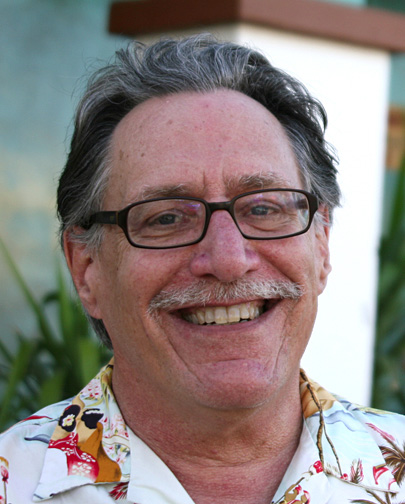
Steve Weiss
No Festival Required Celebrates 10 Years
Posted on 6/13/12 by Christina O'Haver » No Comments
Steve Weiss took out his yellow highlighter.
The local resident and film programmer was preparing to show an independent documentary at the Phoenix Art Museum and was marking up the resumé of Los Angeles filmmaker, Andrea Kreuzhage.
He wanted to mention some of her most significant projects to the audience during his introduction to her piece, “1000 Journals,” but he realized he was highlighting almost all of them. Unable to choose from the impressive list of experience, he asked Kreuzhage what he should talk about.
“I don’t want you to mention any of that,” she replied. “If you want to say anything, say that I sold my house to make this film.”
“That’s why I like independent films,” Weiss explains as he tells the story that has stuck with him for the last three years.
Weiss’s Phoenix-based, one-man film programming company, No Festival Required, is turning a decade old this year – a milestone he’s amazed by.
“It was a total crapshoot 10 years ago,” he says.
The idea developed out of his and the film community’s discontent with the traditional process of film festivals, which Weiss says rarely includes explaining to filmmakers why their pieces aren’t selected and often includes charging such filmmakers the same entry fee as those who receive slots in the festivals.
Weiss came across filmmakers in search of other avenues for presenting their short films and, in 2002, he began forming “the anti-festival.”
In June of that year, Weiss and former Modified Arts booker Leslie Barton threw up a sheet at the gallery and performance venue and waited to see if anyone would show up to watch the approximately 60 minutes of content Weiss had gathered. After seeing a decent turnout, Weiss and Barton deemed the inaugural show a success and decided to continue it. They played more than 600 short films in 50 screenings over a period of five and a half years.
While still screening regularly at Modified Arts, Weiss began showing movies at other venues. His first show outside of NFR’s Roosevelt Row home occurred at the Phoenix Art Museum in February 2004 and consisted of a compilation of what he considered to be the best short films from the screenings at Modified Arts.
In 2010, Weiss heard about FilmBar, a independent movie theater-slash-bar, slated to open in Downtown Phoenix. He approached owner Kelly Aubey about getting involved, and after assisting with six months of pre-planning, Weiss spent six more programming for the space until his departure in August 2011.
Weiss has learned over the years that bringing a film to an audience is much easier than bringing an audience to a film.
While screening at one location, Weiss had to attract people who were willing to see a flick that they knew nothing about and maybe wouldn’t even relate to. But showing movies at various locations allows him to present a broader range of work and attract viewers who actually have an interest in the specific content of the films.
He says his Building Communities Cinema series, which includes films about improving the livability of cities, attracts many Downtowners and arts advocates.
Weiss’s predictions for the future of NFR include continuing to work with many different venues and individuals, becoming more involved in the film distribution process to help filmmakers promote and sell their films, and maybe even bringing shows to small towns interested in creating art house, documentary and independent film environments.
Weiss enjoys gathering the community around uncommon cinema and championing filmmakers’ good works.
“There are a few films that I’ve screened and re-screened because I just think if the whole world hasn’t seen these films, I’m just going to show them again and again until just one person is left in the theater,” he says.
For Weiss, one of the biggest benefits of working with independent films is developing close connections with filmmakers like Kreuzhage, whose “1000 Journals” documentary he has screened twice.
“For the viewer, I think it’s knowing that people really put their hearts into these things,” he says.
Upcoming Shows
Film: “Trimpin: The Sound of Invention”
Filmmaker: Peter Esmonde
Date: Thursday, June 14, 2012
Time: 7:30 p.m. (Doors open at 7 p.m.)
Where: SMoCA Lounge, Scottsdale Museum of Contemporary Art
Admission: $7
Synopsis: “A documentary feature profiling the life and work of a highly creative and somewhat eccentric artist/inventor/engineer/composer. The artist Trimpin generally shuns publicity, yet he has received a MacArthur ‘Genius’ Award, a Guggenheim Fellowship, and many other international accolades for his outrageous musical investigations.” Learn more
Film: “Two Americans”
Filmmakers: Dan De Vivo and Valeria Fernández
Date: Monday, June 18, 2012
Time: 7 p.m. (Doors open at 6:30 p.m.)
Where: 3rd Street Theater, Phoenix Center for the Arts
Admission: $6
Synopsis: “The life of a 9-year old child is forever changed when ‘America’s Toughest Sheriff’ arrests her Mexican parents for working at a local carwash. Fighting to rescue her parents from deportation, Katherine Figueroa becomes the poster child of a movement to oust Maricopa County Sheriff Joe Arpaio from office. Exposed by the media, Kathy’s family is challenged to overcome their fear of living in Arizona. But when Sheriff Joe uses his power to retaliate against the County Board, it’s the legality of his actions that is questioned. Now the Sheriff’s fate hangs in the balance of an FBI criminal probe.” Learn more
FilmBar Brings Indie Cinema Back to Downtown
Posted on 10/04/10 by Christina O'Haver » 2 Comments
For years, Steve Weiss felt like there was something missing in Downtown Phoenix’s art scene.
When he heard about FilmBar, a new independent movie theater and bar opening in Evans Churchill, the Executive Director of No Festival Required Independent Cinema hoped he would be able to get involved.
“[Film] was always sort of in between the other kinds of entertainment, or maybe in an art space or a gallery space that could throw a sheet up on the wall,” Weiss said. “So, I was always hoping that there’d be a space, and then I found out about FilmBar.”

FilmBar is set to open later this year at 2nd and McKinley streets.
Weiss, who became involved in programming eight years ago, approached FilmBar owner and founder Kelly Aubey about programming for the theater. Although Aubey had originally planned on doing the programming himself, he gave the position to Weiss.
“As this project progressed, I realized that I wouldn’t have the time to program effectively,” Aubey confessed. “Steve’s got a lot of experience and was a natural fit, so it was a pretty easy decision to bring him on.”

FilmBar founder Kelly Aubey. Photo by Steve Weiss.
FilmBar plans to showcase independent, classic, art house, cult, foreign and experimental films, according to Weiss. He wants to bring in films that “educate, entertain and enlighten” to keep the audience thinking, but he hopes they will enjoy themselves, too.
Both Weiss and Aubey believe the audience should expect films that are different from others they’ve seen before.
“Too often, movies and music are just a rehashing, or even a straight copy, of someone else’s work and it always excites me when I see someone taking a chance to explore new territory,” Weiss said. “They are artists — and it’s the artists I want to work with.”
Aubey added that although films from all over the world will be shown at FilmBar, he is passionate about giving local filmmakers a place to screen their work as well.
For members of the public who would like to suggest films to be shown, Weiss said there is contact information on the FilmBar website. He added that some of the films he has championed over the years have come to him through suggestions.

FilmBar programmer Steve Weiss. Photo by Jamie Peachey.
The films won’t be played on loop behind a bar all day long, but rather shown in a 60- to 80-seat digital cinema in a separate room. There will be multiple screenings of a certain film from Thursday to Sunday each week, and the film may carry over to a second weekend if it is successful. To give the audience a chance to utilize the bar, the films will be staggered to allow extra time in between screenings, and some of the longer movies may have intermissions.
The duo has decided on the debut film that will show at FilmBar’s grand opening in December, but is not releasing it to the public just yet. Weiss says there will probably be a soft opening in November to present the space, which he believes will exceed people’s expectations along with the programming, to ramp up to the debut film.
Aubey is simply excited to be a part of the Roosevelt Row area. He was inspired to create FilmBar by the efforts of others in Downtown Phoenix that have brought interesting bars, restaurants and galleries to the area.
“What I want to achieve is to add a mix of other great independent businesses Downtown so that Phoenix can continue to mature into a cultural destination like all great cities,” Aubey said.
FilmBar is located at 815 N. 2nd St. (light rail at Roosevelt Station) Stay tuned to DPJ for information on its grand opening later this year.
In Case You Missed it: Downtown Voices Visioning Conference Speech
Posted on 1/19/10 by Si Robins » No Comments
Below is the transcript of Steve Weiss’ speech at the opening of the Downtown Voices Coalition‘s Visioning Conference on January 15, 2010 at the Matador Mexican Restaurant.
Good evening and welcome to the pre-event for tomorrow’s Downtown Voices Coalition Visioning Conference.
You know, Downtown Voices was formed in a place just like this. As a matter of fact, if the Matador bar wanted to, they could create a new drink called the DVC. All you need is a shot of good tequila and a signature on an article of incorporation!
What some may not realize is that Downtown Voices Coalition was the culmination of a chain of events that began with a move to bring a pro football stadium to downtown. As the art folks and small business owners got wind of the plan, they felt their work to make a new and interesting arts district was going to suffer with a giant stadium plunked in its center. Though the protests didn’t stop the demolition and razing of the Evans Churchill neighborhood by speculators and the City, it did manage to shine a light on the project, and successfully persuade the city officials to put the idea aside.
For the first time, artists and small business folks started talking to each other. Then, the Jerde Project, a big box mall development, was floated as another direction for downtown. Ideas were being discussed for another ASU campus, and suddenly the University began as a player in the fate of the downtown community. The fledgling organization known as D-PAC, the Downtown Phoenix Arts Coalition, felt now was the time to get the other voices heard, ones that didn’t have political power or an outstretched hand looking for tax incentives and variances.
The result was an event singular in the City’s history: A one-day facilitated discussion at the Icehouse of over 80 downtown stakeholders, to determine what WE as a group wanted for the future of downtown Phoenix. The resulting report created from the discussion was titled “Downtown Voices: Creating a Sustainable Downtown”. It was not only presented to the City of Phoenix, but also found its way into many of the aspects of the newly created Downtown Strategic Plan.
On that day, when we all met and talked, new relationships were formed.
Artists, business owners, developers and, yes, even city officials began to realize that the ultimate goal of the downtown stakeholders were actually very similar.
However, as the dust began to settle from the good work done, development projects in once untouched and unwanted areas began to rise. We as stakeholders learned how zoning by variance and self-imposed hardships could dramatically change the development rulebook.
A key group of stakeholders, coming from different backgrounds yet tied together with similar concerns, realized it would be beneficial to speak with one voice, the voice of what became the Downtown Voices Coalition. We met with a lawyer at the old Ramada Inn downtown bar, and with a toast, began our first mission and organization.
Negotiating a better project for the Summit at Copper Square became our first test, and as we created our organization’s by-laws and elected officers, we found direction from that initial Downtown Voices document.
It was a boom time, and it seemed many times we were playing Whack-A-Mole, that great carnival game where hitting one pop-up mole only made another rise. We found ourselves as a group both welcomed and disparaged. The tactics of “Agitate, Negotiate and, when all else fails, Litigate” brought us through a series of events with many successes and some sad losses.
A Tibetan Buddhist Lama, whom when asked at a conference the definition Buddhism, replied “Divine Common Sense”.
It is regular old commonsense that drives our group, and something else just as tangible. Dr. Howard Cutler has worked with His Holiness the Dalai Lama to write three books, The Art of Happiness, The Art of Happiness at Work, and The Art of Happiness in a Troubled World.
In each book, the over-arching view expressed that people as a common goal ultimately desire happiness above all else.
As I’ve worked with this group of fellow DVC members, I’ve come to realize that each member seeks the same thing: Happiness in their lives and in their community. There isn’t one member of DVC who wouldn’t want happiness above all other things. The desire is a better place to live, a better place to create sustainable businesses and a genuine dedication to staying here and making it a great city for all of us.
An example of how different this sentiment can be expressed was in one particular issue, when a proposed out of scale development’s lawyer declared in front of City Council that he’d “never dealt with people who didn’t want to raise their property values.”
The truth is, we represent people who aren’t moving toward the next buck or the next city, to which it’s more important to raise living values than financial values.
Since 2004, new blood with new ideas have entered the downtown picture. Individuals are drawn to the small-town feel of the 5th Largest City in the Nation, great small businesses have enhanced neighborhoods, partners have been found in thoughtful development and the ASU Downtown campus is showing signs of like-minded goals for that sustainable, cool and enhanced downtown where we all will happily live, work and recreate.
In these circumstances of a down-turned economy, it seems appropriate to take a breath, reflect a bit on the past, but, most important, look Forward.
What is the City that we hope for?
What have we achieved and what can we improve?
How can we get more voices to speak as Downtown Voices so that together we can create that happiness we all desire?
These are tomorrow’s questions, and the facilitated discussion we begin at 10 am tomorrow at the A.E. England building at OUR Downtown Civic Space will help to provide some answers.
Tonight we reflect, remember old battles, good friends, vocal and silent partners. Tomorrow we begin anew and renewed, with new ideas and voices, to create a better Phoenix.
I toast the future. To the City of Phoenix!
Inside Downtown Voices Coalition
Posted on 9/14/09 by Yuri Artibise » 3 Comments
If you enjoy living, working or playing in Downtown Phoenix, chances are you owe a thank you to the Downtown Voices Coalition (DVC). Formed as a result of a 2004 summit of Downtown stakeholders, the coalition has been working behind the scenes to ensure the continued growth of the core based upon existing local resources.
Coalition members are unabashedly dedicated to supporting the local, independent business owner over the big-box developer or out-of-town corporation. They are strong advocates for existing Downtown neighborhoods and residents, the arts community and the unique historic properties throughout Downtown Phoenix. These are interests that DVC feels have been lost in the rush to redevelop the core. In the words of Steve Weiss, Chair of DVC, “If not us, then whom?”
While DVC has been criticized in the past as being an insular group catering to like-minded people, this is due largely to the fact that the group is more interested in acting than promoting itself. And, these volunteers have indeed been busy. On any given issue affecting Downtown Phoenix, you will find DVC working with other community groups, meeting with city leaders, speaking at zoning hearings and serving on city committees. Some recent issues it has been involved in include extending the weekend hours for light rail, pushing for shade structures at the new ASU nursing building and saving the Sun Mercantile building (the last remaining historic Chinese-America building in Downtown) from a “façade-ectomy” that would have destroyed much of its authenticity. Despite the criticisms, DVC has been promoting its monthly meetings and publishing its agendas and minutes on its website for some time.
Anyone who is interested in Downtown Phoenix is encouraged to attend and participate in DVC’s monthly meetings, held the second Saturday of every month, starting at 9:30 a.m. at the Roosevelt Commons meeting room. Each month they cover a variety of issues related to Downtown, and often feature guest speakers and other community groups.
For example, during the September meeting, the 20 or so people in attendance heard from Kimber Lanning of Local First Arizona about the city’s adaptive reuse task force that is looking at ways to simplify the process of adapting existing buildings for new purposes. Lanning also talked about Local First’s upcoming 10% Shift campaign that will ask Arizonans to shift 10% of their current spending from national chains to local businesses. This change is estimated to create thousands of new jobs throughout the state while stimulating billions of dollars of new economic activity. Check back with DPJ for future news on both of these issues.
Next up on the September agenda was Carol Johnson from the City of Phoenix Planning Department, who was invited to update the coalition on the planned Jackson Street Entertainment District and the Downtown Urban Form guidelines. She also talked about the city’s general plan update, which is getting underway this fall. This year’s theme is “Imagine Phoenix in 2050 — What Do You See?” and will involve extensive public consultation at a series of public meetings to be held throughout the city between October 2009 and June 2010. To keep informed of the process, including upcoming meetings, residents are encouraged to join the PlanPhx mailing list or follow its Twitter feed.
Also discussed at the meeting was a follow up to the April 2004 summit. This event resulted in a document that outlined many of the priority issues that the coalition has been addressing over the past five years. Given all that has changed in and around Downtown since 2004, it was thought that it was time to hold another community event. Planning is still in its early stages, but DVC is exploring locations and dates for an early December event. Stay tuned for more details as they become available.
Other business that was discussed included an overview of the upcoming Park(ing) Day activities in Downtown Phoenix on Friday, September 18; a brief introduction to an ASU project to create infill development in Downtown Phoenix; and a discussion of the economic and community impacts of Phoenix Sky Harbor Airport’s contract renewals.
Overall, the meeting certainly lived up to its billing as a lively discussion of issues that matter to Downtown Phoenix. The next meeting will occur on October 10. The Roosevelt Commons meeting room is located at 825 N. 6th Ave.


