Downtown Phoenix Journal
  • Arts & Culture
  • Eats & Drinks
  • Style
  • Sports & Rec
  • Innovate
  • Live Here
  • Build Here
  • Engage

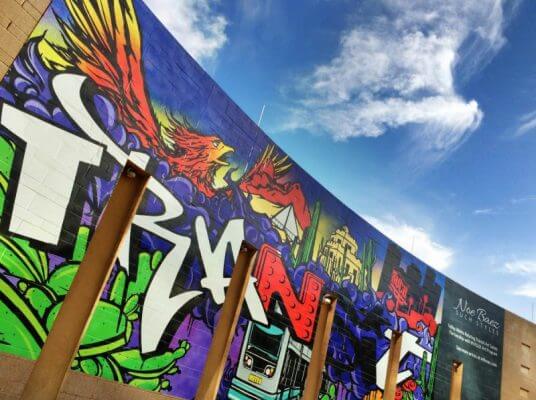
public art

Giving a Crap About Where You Are

Posted on 1/29/13 by Jen Urso » No Comments

Graphic by Jen Urso

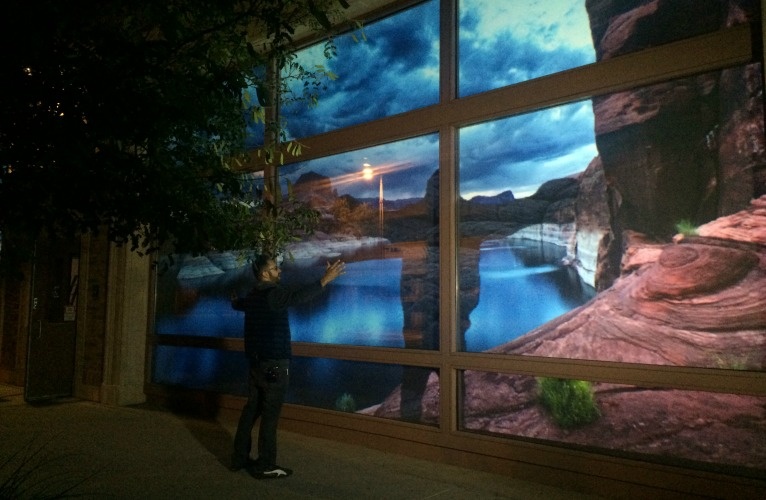
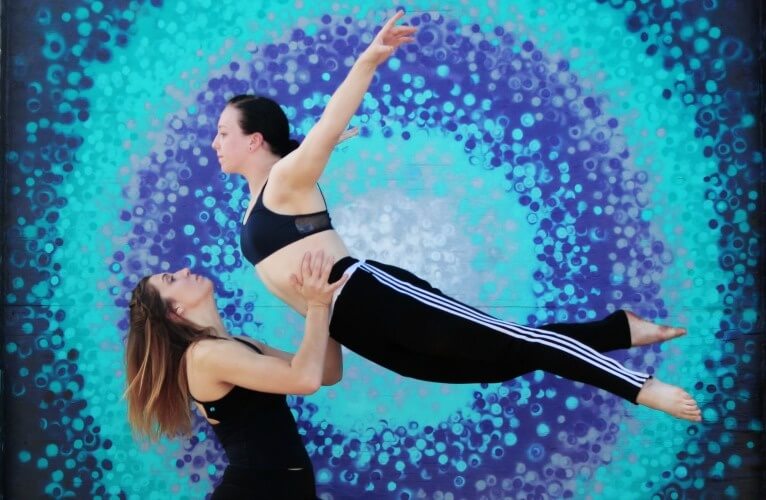
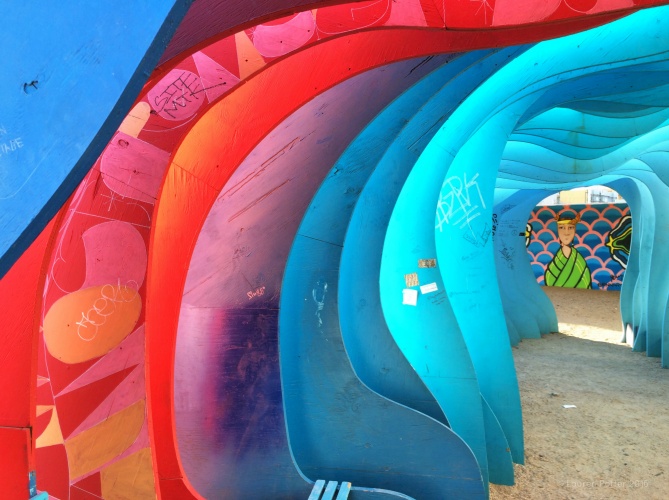
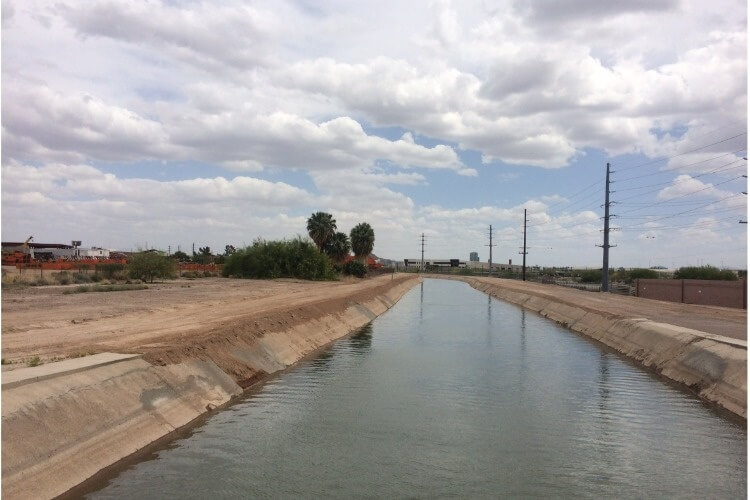
It happened again — another announcement in my inbox about a show where artists explore the concept of space or place.

Last week there was one for a panel discussion, one for a workshop and one for an international symposium. Then today, I received an announcement for A Space Called Public that includes “diverse works by twelve artists from different countries with the aim of generating a new conversation about the concept of public space today” that takes place in Munich. I also found one called the Home Base Project: a site-specific residency in Berlin that explores the notion of home and even has an aptly named “Nomadic Residency” that takes place in different locations around the globe every year. One thing about these events is that they never seem to happen in the same place twice.

All of the these events and shows have us scurrying around to different locations in order to learn about a sense of place. We end up having to dislocate ourselves in order to figure out where we are. I begin to wonder why this is now such a prevalent issue with contemporary artists.

Within the globalized, internet-ed world, it is no longer really necessary for artists to uproot themselves and permanently move to a cultural center. It could definitely help to be entrenched in an active community but plenty of artists find it sufficient to stay at their home base to network themselves and their work out into the world. In order to do this, many find themselves applying for artist residencies which have increasingly become the method in which we can temporarily connect with other artists, institutions, critics, curators, and writers while having the time to concentrate on a solid body of work.

As we uproot ourselves for a short while to become familiar with foreign territory and accustomed to a new way of doing things, it’s no wonder we might begin to think about where the hell we are. What is “home” after all? Who is your “community?” How does a person feel comfort in a new place and then become capable of making a new, meaningful work? The first thing that might come to mind is “Where am I?” as well as “Who am I in this space?”.

Even for those who stay put and apply to calls for work increasingly find projects and shows questioning our concept of space. Take the City of Phoenix’s recent call for Cultural Connections (made possible through an Our Town grant from the NEA). This is a project intended to connect our underutilized spaces and “revitalize” them through a series of art pieces. The IN FLUX project that began in 2010 (which has now joined forces with other Valley cities) has worked towards reinvigorating vacant spaces and storefronts while providing programming that connects people to them. Both of these projects focus our attention on how the spaces that we regularly traverse might have meaning to us. They attempt to tie us into our environment.

“New Beginnings” by former eye lounge member Peter Bugg from IN FLUX Cycle 2, Photo by Jesse Tallman

Why do we feel so lost?

The apparent availability of everywhere via the internet and the ability for more people around the globe to access the internet creates a flattened illusion of place accessibility. We can see more and be in touch with more people, as well as the perspective of their work, so that it no longer feels satisfactory to stay in one place. With the whole world out there, it seems provincial and limited to want to become established in one spot. Additionally, artist residencies and curators from around the world have tapped into this desire for artists to expand their scope and be involved in the larger network that becomes the art world. The sacrifice just might be not knowing where you are when you wake up in the morning.

Naturally, it seems the dialog and the work itself might turn to thinking about the very fundamental question of where we are. While these shows, discussions and symposiums aptly question how we look at the spaces we occupy, they also crave for us to come from different perspectives and locations — a confusing and ironic twist. We must be diverse and adaptable enough to remove ourselves from what we might consider to be our “place” in order to step back and assess it for others.

For the artists of Phoenix, this stepping back and forth — moving away for a residency and coming back after three months — might actually help with the identity crisis this city has been accused of having. Or, all this running around and flying to different locations might just give us perpetual jet lag and a hazy sense that this place is like that place. Or, it’s very possible that all these discussions and exhibits might just be pushing at the sense that we’re not really sure what a “place” is anymore.

Tags: artist residency, City of Phoenix Arts, Cultural Connections, Eye Lounge, IN FLUX, Peter Bugg, place, public art, space
Posted in Arts, Arts & Culture |

Putting the Public in Public Art

Posted on 12/06/12 by Jill Bernstein » No Comments

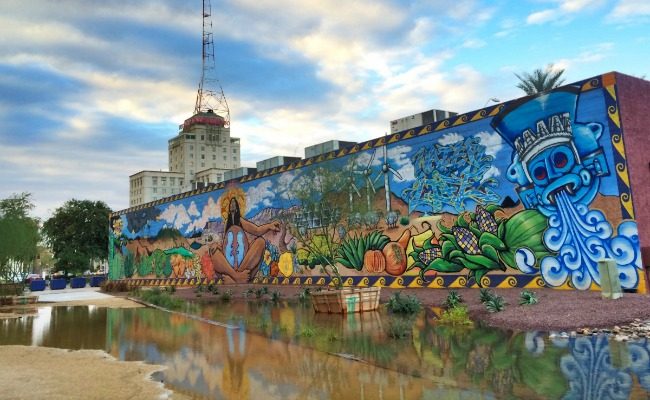
Hugo Medina is a force to be reckoned with; he’s not just a talented muralist and the winner of the Public Art Award category in the newly announced Mayor’s Arts Awards, he’s someone who can rally a community and make things happen.

In this case, that “something” is an extraordinary public mural that will emerge over this weekend at the inaugural Phoenix Festival of the Arts. The mural will be extraordinary in both size and scope and it took a dynamo like Medina to make it all work.

Using Facebook, Medina put out a call to artists to participate in the project. “I wanted a diverse group of artists to get involved,” said Hugo. “Everything from accomplished muralists, to fine artists, students, graffiti artists, and novice painters.”  Over 80 artists responded to his call.

Medina’s concept created a simple but elegant way to bring artists into contact with each other and the public. Each of the 80 artists will have a 4’ X 8’ wooden panel (donated to the festival by Home Depot) to make their own. In between each artist panel will be a blank panel where the community will be invited to participate. The two artists working on either side of the blank panel will collaborate on an idea for the community to realize.

This allows for each artist to make their own work, but also gives artists who may have never met previously the chance to work together. The only restriction on the work is that it not be negative and that it is in some way focused on Downtown Phoenix. By placing the blank community panels between the two artist panels, Medina is hoping that a natural flow will develop from one panel to the next.

The mural will be completed during the three-day festival and when done, will consist of 160 four-foot high panels, stretching for 1,280 feet.  There will be several mural stations throughout the festival where the public can watch the artists work, or grab a brush and participate. Everyone is invited to lend a hand and make their mark, including kids.

Bring the whole family down to Hance Park this weekend to the Phoenix Festival of the Arts to make your mark on this unique public art project that is bringing artists and the public together to create something everyone can be proud of and enjoy.

“Come Monday morning, I’ll be working with the City of Phoenix to pack up the panels and move them to the corner of Central and Indian School,” said Medina. This is the new  PHX Renews site at Indian School Road and Central Avenue; a large empty space that has been activated into temporary multi-use public space. “I’ll curate the placing of the panels around the park,” he continued. “Some will be placed along the fence to make them visible from the street, and others will be scattered along the paths within the fenced space.” The panels will remain at the site for the next three years.

If you go:

Event: Community Mural at Phoenix Festival of the Arts

Supported by: Artlink and made possible through a donation from Home Depot

When: Friday, Dec 7 through Sunday, Dec 9

Times: Friday 2 to 9 p.m.; Saturday 10 a.m. to 9 p.m.; Sunday 10 a.m. to 5 p.m.

What’s required: Your creativity. Paint, brushes and wood panel canvasses will be provided.

Tags: Hugo Medina, Mayor Greg Stanton, mural, Phoenix Festival of the Arts, public art
Posted in Arts, Arts & Culture, Culture, Engage PHX, Evans Churchill, Families / Kids, Festivals, News, News & Events |

Filling a Dangerous Void

Posted on 12/05/12 by Jen Urso » No Comments

There are a lot of things out there in the world. There are a lot of spaces. Some of those spaces come very neatly constructed in organized grids with obvious purposes and expectations. They come provided to us by the organizers and planners of our city. Some other spaces are a bit looser—falling into a bit of chaos and uncertainty. In this city, they may be the vacant lots, the alleys or that little bit of land between the sidewalk and the place you want to get to. It could be the space in front of an office building or a traffic median or it could even be the area where a group of undesirable-looking people are standing. What is there to do with these unadorned, underutilized spaces?

Joan Waters’s Coronado Fence

To hem in the chaos of this nameless, frightening void enters the potential for a public art piece. A call is produced. A panel is convened. Submissions are gathered and submitted. Finalists are selected. Committees drink coffee and consider the possibilities. Suddenly, the artist has become a part of creating a sense of order and experience that is being dictated and organized by a system whose purpose is to manage the populace. The artist becomes part of generating a landscape or panorama and perhaps gives them an opportunity for their work to be seen by more people.

In the pre-film era, people came to experience moving panoramas painted onto long scrolls that illustrated historic scenes or faraway places. Moving panoramas provided an escape, much like film. Public art replaces the mundane with a more spectacular vision. Both instances fill a void with a more beautified version of what was once there and create a pleasant image on the horizon.

Sonya Ishii & Jim Hirschfield’s Overpass at Grand Avenue & Camelback Road

Trude Parkinson & Michael Dollin’s Cordova Gardens Median


So, what’s wrong with things being nice? More appropriately the question might be, what’s wrong with what was once there? An artist will jump at the opportunity to conduct an ambitious project with financial support. It is the philosophy behind adorning and filling our world that is interesting. An artist, entering into a space and identifying an appropriate location of meaning is different than an institution identifying an unattractive segment of their overall urban design and its need for adornment.

Overall, we enjoy a more human-constructed beautified alternative of our landscape. The moving panorama shows us a version of our place that perhaps we’d like it to be. Meanwhile, the concept of beauty is altered from the nuances of our natural landscape, however nameless, undefined and potentially icky it may be, to a worked-over, planned presentation of our place. The vastness of the desert can be kind of scary.

Featured image: Laurie Lundquist’s “Mountain Pass Pedestrian Bridge”

Photos courtesy of the City of Phoenix Office Arts & Culture

Tags: landscape, panorama, Phoenix, public art, vacant lots
Posted in Arts, Arts & Culture, Build Here PHX |

The Man Behind the Mural: Roy Sproule and the Valley Youth Theater Mural

Posted on 12/04/09 by Yuri Artibise » 10 Comments

Amidst the new construction, public art projects and restaurant openings throughout Downtown Phoenix, one local artist made a big impact with little more than a brush, some paint and a desire to create. Spanning across the 69- by 11-foot north wall of Valley Youth Theater’s corporate office is a new mural created by Roy Frank Sproule III, a 27-year-old avionics technician stationed at Luke Air Force Base.

Photograph by Yuri Artibise

Photograph by Yuri Artibise

Roy says he didn’t find the wall, rather the wall found him. It was during a June 2007 First Friday when he happened across the wall at 807 N. 3rd St., just south of Garfield Street (across the street from Bunky Boutique and the Roosevelt Tavern). While he had only assisted in painting large-scale murals, he was looking for an opportunity to create his own piece in a visible setting.

“There are just some things you can’t do in small spaces,” he says. “Large images have a different effect on people.” When he came across the empty wall on the high-traffic street, Roy knew it was “just right” for a mural. He went home that night and spent the next six months putting together a portfolio.

In December 2007, Roy returned to the building and knocked on the door. At the time, he didn’t even know who owned the building, just that it would be a great opportunity for him to establish himself as a muralist in Phoenix. After meeting with the Valley Youth Theater staff, he ended up talking with Producing Artistic Director Bobb Cooper. Bobb was enthusiastic about the idea, especially after learning that Roy would donate the project to help build his portfolio.

Roy was given images of 20 years of Valley Youth Theater performances to work with. The photographs included images of the theater’s famous alumni, such as singer Jordin Sparks and actress Emma Stone, and popular children’s story characters like the cowardly lion in The Wizard of Oz. Using these pictures, he made a collage of over 50 photographs to fill the 759-square-foot wall. Once the Valley Youth Theater approved his design, Roy used perforated patterns created in Photoshop to aid him in outlining the shapes with charcoal dust (pounce), a technique used by Renaissance fresco painters.

Photograph by Jeffrey Lowman/azcentral.com

Photograph by Jeffrey Lowman/azcentral.com

He started to paint in March 2008 and donated immense amounts of his time and money to the project. Roy spent up to 40 hours a week of his free time at the site over 17 months. He often worked well into the evening, and to avoid the summer heat he pulled several all-nighters. This was all while working full time at Luke Air Force Base. In total, Roy estimates that he spent at least 2,000 hours of his personal time and $1,000 of his own savings purchasing brushes and 16+ gallons of industrial paint for the mural.

Despite the fact that painting the mural basically equaled working another job for a year-and-a-half, Roy doesn’t think it of as anything extraordinary.

“People give 110% of themselves all the time,” reminds Roy, whether it be managing work and family, working two jobs to make ends meet or having a day job to pay the bills and an evening passion to feed the soul. In Roy’s case, his job with the Air Force provided him with the financial base and stability that enabled him to paint the mural.

Roy believes there are two types of artists: those who create for themselves and those who create for the community. Murals should tell a story. While he views the Valley Youth Theater mural as more of a collage, his ultimate goal is to speak through his murals and to create compositions that tell a story.

“If you are not saying anything, you are just decorating,” he says. To this end, Roy viewed his relationship with the theater as a partnership. In return for the opportunity to hone his skills, Roy wanted to help them. He was able to do this with the mural; it will help raise awareness of the theater and the professional level of productions they put on each season.

Throughout the process, Roy progressed not only as an artist, but also as a community member. He formed long-lasting connections to both the places and people of Downtown Phoenix. After a being at the site for 17 months, sometimes for as long as 36 hours at a time, Roy gained a new appreciation for Downtown Phoenix. He saw the city core at its best and worst — vibrant sunsets and sunrises; hot summer evenings and crisp winter mornings; the desolation of quiet Sundays and the frantic energy of First Fridays. Seeing Phoenix from these different perspectives helped him think about the colors and techniques he used differently.

Moreover, Roy was able to meet and become friends with many of the local residents and business owners as he painted. While Roy has always liked being in Downtown Phoenix, his experience with the mural made it feel like home. He enjoys the welcoming, inclusive nature of the artists and gallery owners in the neighborhood. He says, “Roosevelt Row is like family to me,” noting that he met and became friends with more people in the year-and-a-half he spent painting the mural than the 13 years he spent growing up in his hometown.

In addition, Roy feels that Downtown Phoenix provided him with a lot of opportunity, which has allowed him to develop naturally as an artist. He is not forced to chase opportunities and choose things that aren’t a good fit, as in other cities.

“You can be an artist anywhere,” says Roy, but there is something special about Downtown Phoenix. “Being here makes a world of difference.”

Roy is looking for another opportunity to paint a large-scale mural. His dream is to paint the largest mural in the city, preferably on a high rise. Given his talent and determination, there is no doubt it will happen one day.

The Valley Youth Theater is located at 525 N. 1st St. in Evans Churchill, a few blocks from the corporate office where the mural is displayed. For more information, call 602.253.8188.

Tags: Bobb Cooper, Downtown Phoenix, mural, public art, Ray Sproule, Roosevelt Row, Valley Youth Theater
Posted in Arts & Culture, Evans Churchill, News, News & Events, Top 5 |

Civic Park Art Project Delayed Again

Posted on 3/21/09 by Evan Wyloge » No Comments

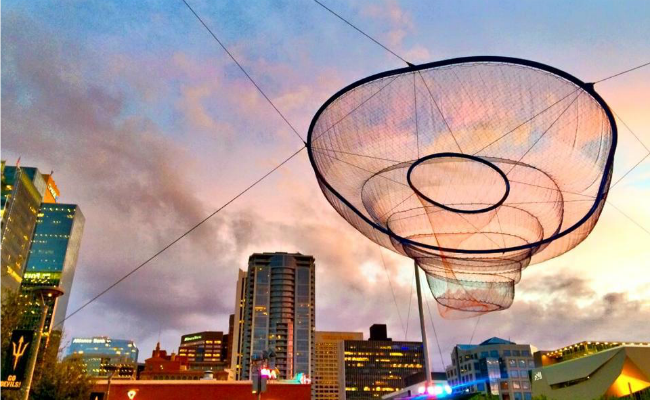
Downtown Phoenix’s looming blue public art piece ran into another delay Thursday, adding further unintended import to the sculpture’s title, Her Secret Is Patience.

Construction crews spent the first half of Thursday attaching what would have been the final installment of the already delayed Civic Park art installation. After consulting the plans, the designer realized that the flowing, woven netting did not fit and would need to be removed and fixed.

Phoenix Public Art Program Director, Ed Lebow said the structural net of the lower portion of the conically shaped sculpture “clearly doesn’t fit.”

“The lower tip was supposed to tip slightly upward to the southwest,” Lebow said Friday.

Instead of resembling a Saguaro blossom, as intended, passersby described the sculpture as a cornucopia shape.

Construction crews spent Friday removing the netting, which will be returned to Diamond Nets manufacturing in Everson, Wash. The engineers and fabricators will analyze the net and determine what went wrong in the manufacture.

Lebow stressed that the city of Phoenix is committed to getting the art piece finished as quickly as possible, and that the repairs or redesigns necessary will be paid for by Diamond Nets.

Neither Diamond Nets nor artist Janet Echelman could be contacted for comment.

Tags: civic park, Downtown Phoenix, echelman, Phoenix, public art
Posted in News |

Sign up
for the DPJ Newsletter:


Your Guide as you Explore Your Core

Whether it’s community news, food, shopping or sports, let the Downtown Phoenix Journal be your guide to an urban lifestyle. We offer a friendly, straightforward insider’s view of all things Downtown Phoenix. From world-class restaurants and museums to events to plan your day around, the Downtown Phoenix Journal is your guide as you Explore Your Core.

Downtown Phoenix Journal is powered by Urban Affair.

Sitemap

  • home
  • eats & drinks
  • arts & culture
  • style
  • sports & rec
  • innovate
  • live here
  • build here
  • engage
  • - About Us
  • - Contact
  • - Advertising

Get to know
DPJ

© 2013 Downtown Phoenix Journal - all rights reserved. Site developed and powered by Invexi
rssBlog Entries • Comments • Sitemap